Andrew L. Johnson prays for strength in the new year, includes announcements about a joint National Veterans of Martin Luther King Jr. event on January 15th, reflects on numbering our days and applying wisdom through the story of Joseph and divine presence in human relationships.
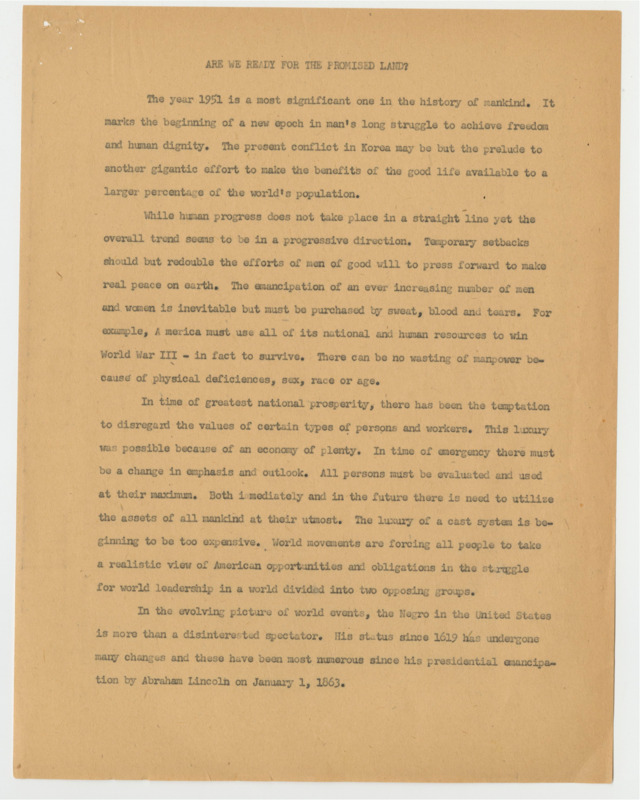
George W. Gore’s speeches at Florida A&M College (and later University) emphasized the institution's role in fostering first-class citizenship. In "Are We Ready for the Promised Land," he explored the Negro’s role, voting rights, and history since emancipation in 1863.
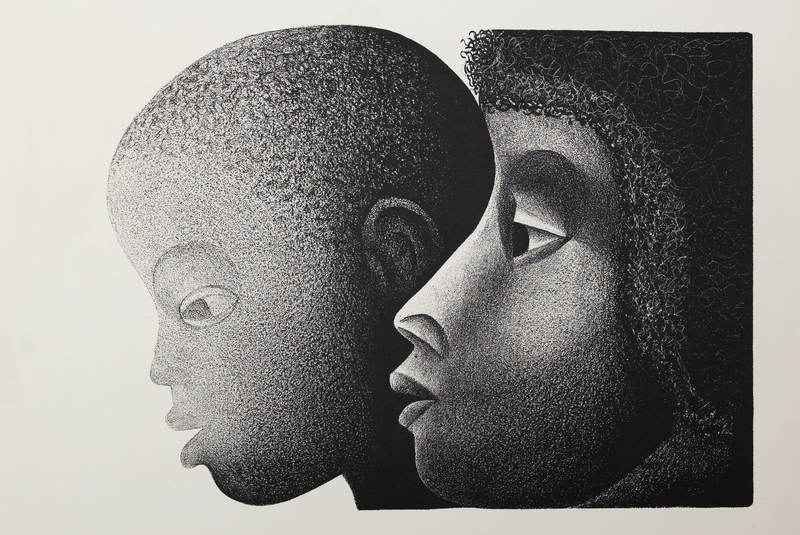
Elizabeth Catlett was an artist and educator from Washington, D.C., who repatriated to Mexico. "Black is Beautiful: Mother and Son" depicts a profile view of a Black woman and her child. Catlett captures the mother's grace and her son's curiosity as they look away from the viewer.
The vintage can of Black Mammy Plastic Roof Cement features a depiction of a Black female figure, reflecting the problematic stereotypes prevalent in mid-20th-century advertising. Often portrayed as a caretaker or domestic figure, this imagery reveals the complexities of racial representation and the commodification of Black identity.
Andrew L. Johnson emphasized the importance of positive thinking and overcoming challenges such as anger, jealousy, and fear, which can hinder personal growth and fulfillment.
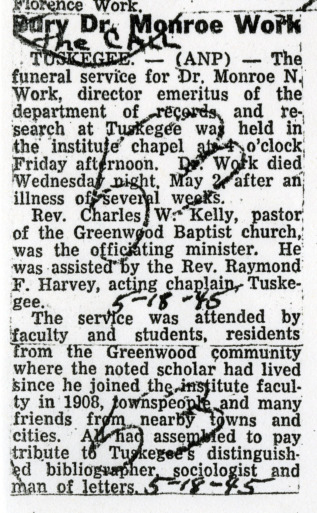
Newspaper article in Kansas City The Call, about Monroe Work's funeral service at Tuskegee. The article mentions two ministers who officiated Work's service: Charles W. Kelly and Raymond F. Harvey. Faculty, students, and members of the Greenwood community attended the service.
Herbert G. May urge steadfast obedience to God and moral discipline amid uncertainty, to emphasize maintaining goodness, integrity, and fidelity to one’s principles even in the face of adversity.
A "colored only" sign was a segregation-era sign typically found in the United States during the Jim Crow era, which enforced racial segregation in public places. These signs were used to designate areas, facilities, or services that were reserved for people of color and donated by Dr. James Eaton.
Samuel L. Gandy emphasized the concept of consumerism as a religious experience, urging the congregation to avoid being "taken" by life's circumstances.
Andrew L. Johnson addressed the historical relationship between Tuskegee and the state, with the financial challenges faced due to the Alabama legislature's failure to pass the Tuskegee appropriation bill, which would have provided $1.25 million towards the university.
William Watley emphasized the beatitudes, stressing blessings for the poor in spirit, mourners, meek, those seeking righteousness, merciful, pure in heart, peacemakers, and persecuted.
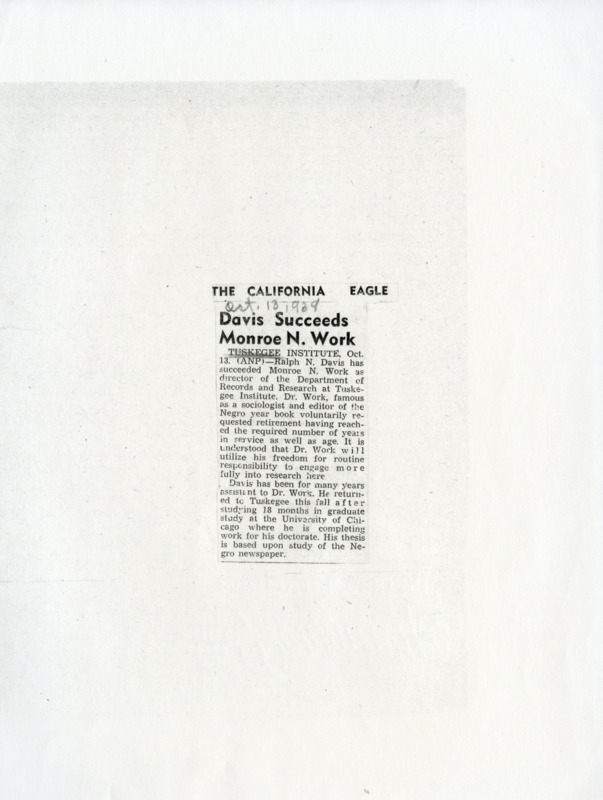
Newspaper article in The California Eagle about the new director for Tuskegee's Department of Records and Research, Ralph N. Davis. Mentions Monroe N. Work's retirement and that Davis worked as Work's assistant for many years.
Cornelius E. Thomas emphasizes the importance of holding onto faith and dreams, symbolized by the biblical significance of the rainbow as a covenant sign and urges the congregation to maintain hope and optimism.
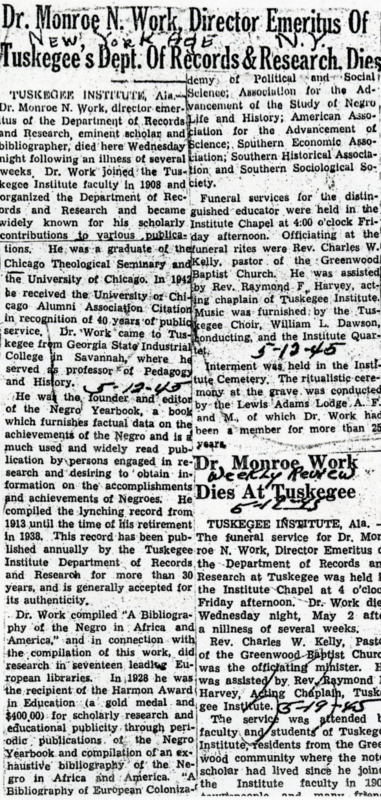
Newspaper obituary for Monroe N. Work in the newspaper The New York Age in New York, NY. The article mentions Mr. Work's funeral service at Institute Chapel and interment at Institute Cemetery. Charles F. Kelley and Raymond F. Harvey officiated the service, while the Lewis Adams Lodge, A. F. and M led the ceremony at the grave.
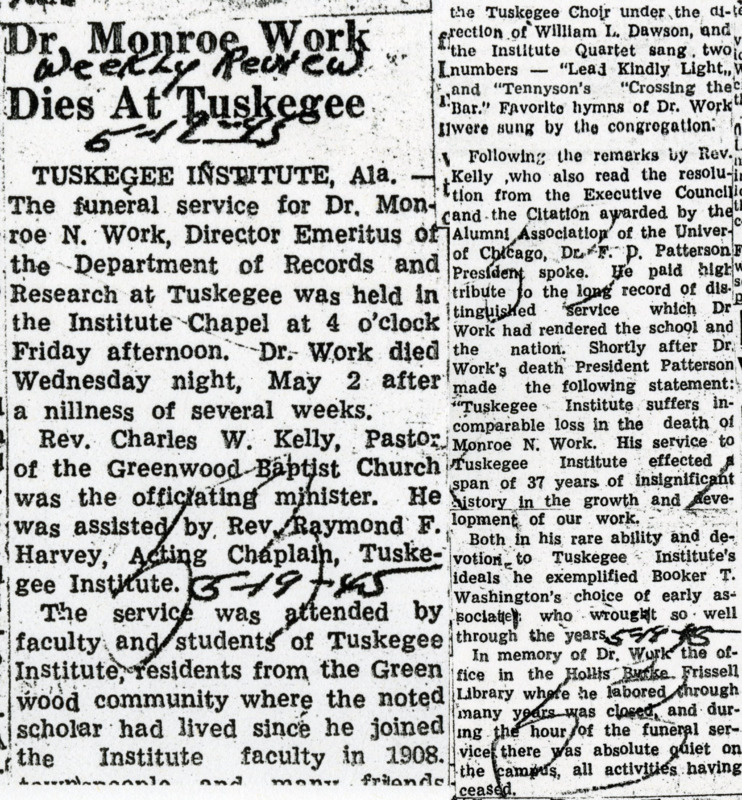
Newspaper article about Monroe N. Work's funeral service at Tuskegee in the Weekly Review. The article includes a statement from Tuskegee President Dr. Frederick D. Patterson regarding Work's death. The article also states that the office in Hollis Burke Frissell Library was closed in memory of Mr. Work.
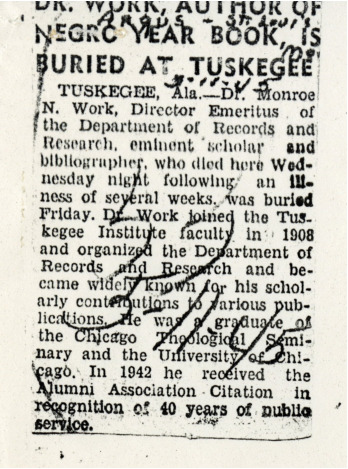
Newspaper article published in the St. Louis Argus in 1945 in St. Louis, MO, discussing Monroe N. Work's burial, professional activities, and education. The article also mentions Work's 1942 Alumni Association Citation for 40 years of public service.
Bishop William M. Smith uses the story of Samson to caution against self-indulgence and moral compromise, urging young people to practice discipline, uphold integrity, and take personal responsibility so they can grow into effective, values-driven leaders rather than repeat Samson’s downfall.
Andrew L. Johnson reflects on the potter parable in Jeremiah 18, emphasizing God’s patient work in shaping flawed humanity and, drawing parallels to Martin Luther and Martin Luther King Jr., urges believers to submit with honesty and integrity so they may be molded into a “new creation.”
Andrew L. Johnson’s sermon urged the congregation to strive for excellence, symbolized by gold, over mediocrity, represented by bronze, emphasizing the lasting value of gold in all aspects of life, from education to personal goals.
Dr. Roy Nichols emphasizes the importance of goodness, truth, and beauty as guiding principles, urging the congregation to seek these qualities in their lives and actions reflecting on the New Year.
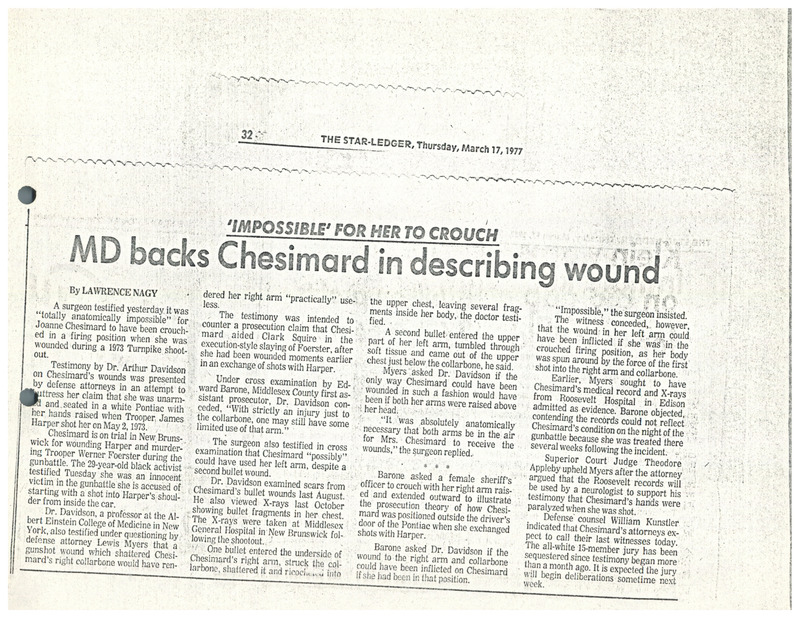
A newspaper article from The Star-Ledger about the testimony of defense witness Dr. Arthur Davidson during the trial of Assata Shakur (JoAnne Chesimard) for the 1973 killing of a state trooper. He testified about the wounds sustained by Shakur and argued that she could not have shot from the crouching position due to her wounds from the shootout.
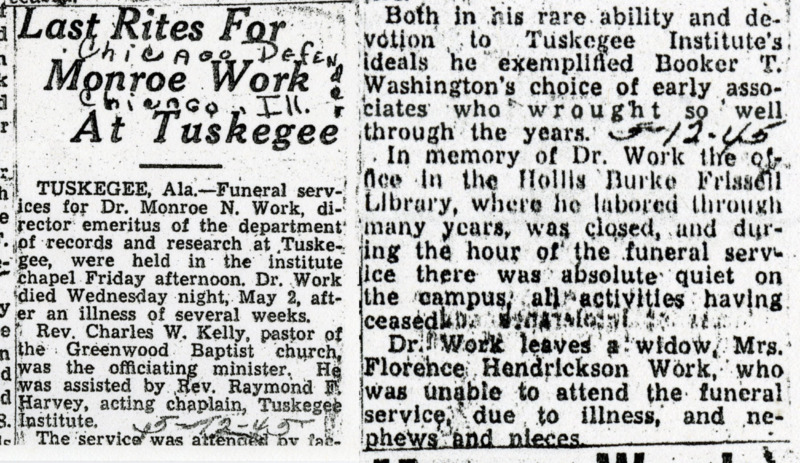
Newspaper article in the Chicago Defender, a newspaper in Chicago, Ill., about Monroe N. Work's funeral service at Tuskegee. The article states that the office in Hollis Burke Frissell Library was closed in memory of Mr. Work and that Mrs. Florence Work was unable to attend the service due to illness.
Rabbi Jacob Rothschild emphasized the need for moral courage and action in response to societal challenges, such as the Vietnam War, the Lod Airport massacre, and the election of a known racist.
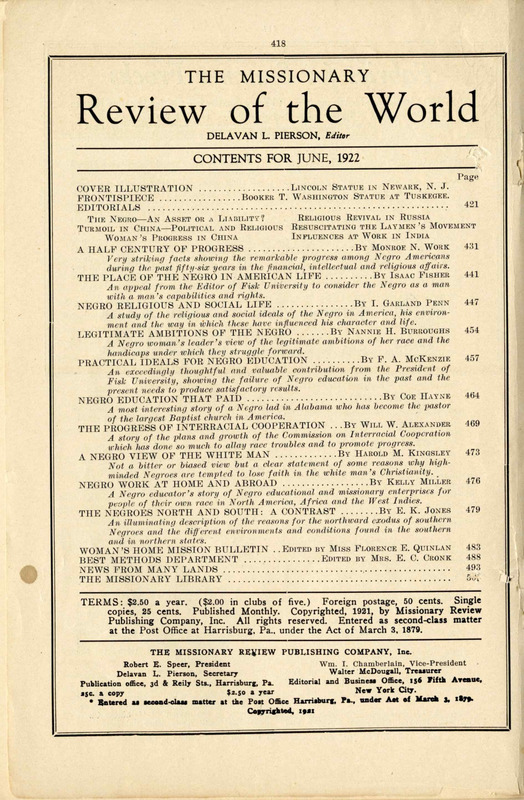
94-page document containing more than 10 articles by a variety of contributors, including a 12-page article by Monroe N. Work titled "A Half Century of Progress: A Contrast, The Negro in America in 1866 and in 1922."
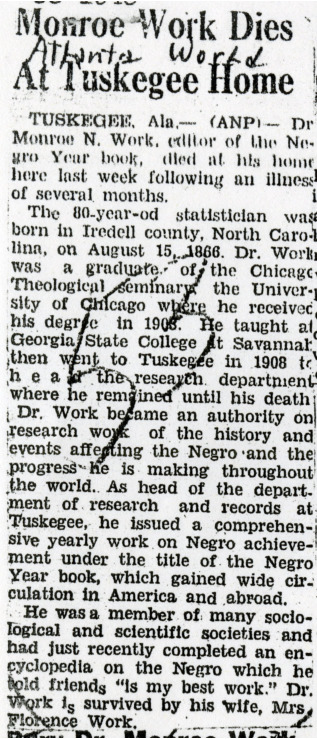
A newspaper obituary article about Dr. Monroe N. Work, a sociologist who founded the Department of Records and Research at Tuskegee University. This article discusses his birthplace, education, and professional achievements throughout his life.